Weekly market insights from Inter Property show that Thailand’s real estate market is going through a major change. In 2025, rising household debt and tighter lending have slowed residential demand across the country. What looks like a nationwide slowdown, however, is affecting different markets in very different ways.
While Bangkok continues to struggle with oversupply and weaker sales, Phuket is showing greater strength. Demand on the island remains driven by foreign buyers, long-stay residents, and lifestyle-focused ownership rather than short-term speculation. This contrast helps explain how Thailand’s property market is not collapsing, but adjusting — and where more stable opportunities are beginning to appear.
Strength Amid Challenges
Phuket Stands Strong Amid Thailand’s Property Market Challenges
Thailand’s real estate sector is undergoing one of its most challenging periods in decades. As highlighted in Thailand’s real estate market downturn and 2026 strategies , residential demand has weakened sharply due to high household debt, tighter lending conditions, and record mortgage rejection rates that continue to suppress buyer confidence.
New housing transfers in 2025 fell dramatically, with the mass-market segment hit hardest. Homes priced in the lower to mid range have seen particularly high mortgage rejection rates, effectively pushing many first-time buyers out of the market. This has resulted in slower absorption rates and growing unsold inventory across multiple regions.
Bangkok Struggles With Oversupply
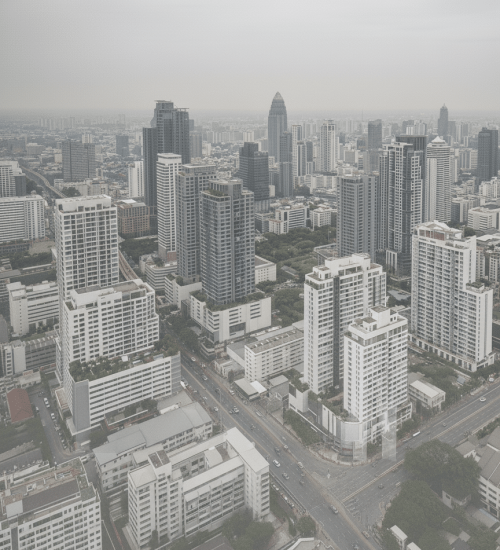
Bangkok remains under pressure in 2025, with condo oversupply from past easy-credit expansion continuing to weigh on prices and sales.
- Prime locations near mass-transit still attract selective buyer interest
- Secondary areas face longer sales cycles and weaker demand
- Developers are delaying projects, offering incentives, or shifting away from mass residential models
The result is a market still searching for balance, with recovery likely to be gradual rather than immediate.
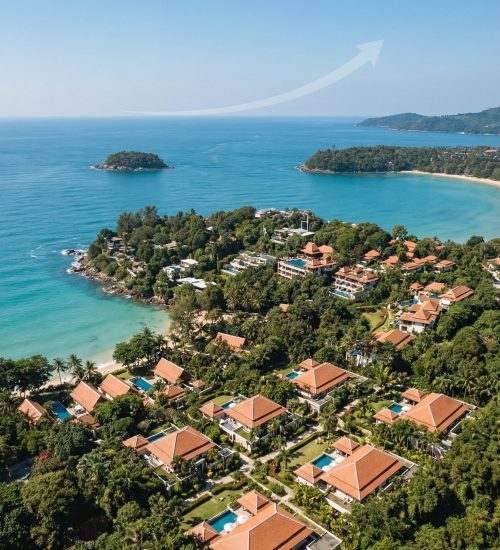
Phuket’s strength comes from lifestyle-focused buyers who prefer villas and low-density living over speculative investments.
Phuket Emerges as a Resilient Exception
Despite nationwide challenges, Phuket stands out, continuing to attract foreign and long-stay buyers with demand focused on villas and low-density, managed properties.
- Strong interest from foreign and long-stay buyers
- Demand focused on villas and managed developments, not speculative condos
- Lifestyle-led purchasing outweighs short-term investment motives
This shift toward lifestyle-driven ownership has helped Phuket remain resilient amid Thailand’s broader property slowdown.
Structural Shifts Across the Property Sector
Beyond residential housing, Thailand’s real estate market is undergoing a deeper structural transformation. According to JLL’s outlook on Thailand’s real estate landscape, growth is increasingly concentrated in non-residential segments such as logistics facilities, industrial estates, and data centres.
These sectors benefit from long-term fundamentals including digital transformation, supply-chain diversification, and infrastructure investment. Meanwhile, the office market is becoming more polarised, with demand shifting toward high-quality, well-located buildings that offer strong sustainability and tenant-focused features.
Market Shift
Stable, income-generating properties are preferred over speculation.
Oversupply Risk
Excess inventory continues to slow sales activity and pricing locally.
Quality Wins
Well-located, professionally managed properties perform better.
The Rise of Experience-Led Property Ownership
Another notable development is the evolution of luxury property ownership models. Thailand is positioning itself at the centre of a global shift toward flexible, experience-driven living. As explored in Thailand at the centre of a new era in luxury home sharing, high-net-worth buyers are increasingly drawn to platforms that prioritise lifestyle access, mobility, and global home exchange over traditional second-home ownership.
This trend is particularly strong in resort destinations such as Phuket and Koh Samui, where luxury buyers value flexibility, professional management, and international connectivity.
Looking Ahead to 2026
While 2025 has been a year of correction, analysts expect cautious stabilisation rather than rapid recovery in 2026. Residential demand may improve modestly, but the era of volume-driven growth appears to be over. Developers are being pushed to adapt — focusing on quality, niche demand, and alternative asset classes rather than mass production.
Thailand’s property market is not collapsing; it is restructuring. Regions like Phuket, alongside logistics, commercial, and lifestyle-led developments, offer insight into how the next phase of growth may unfold.